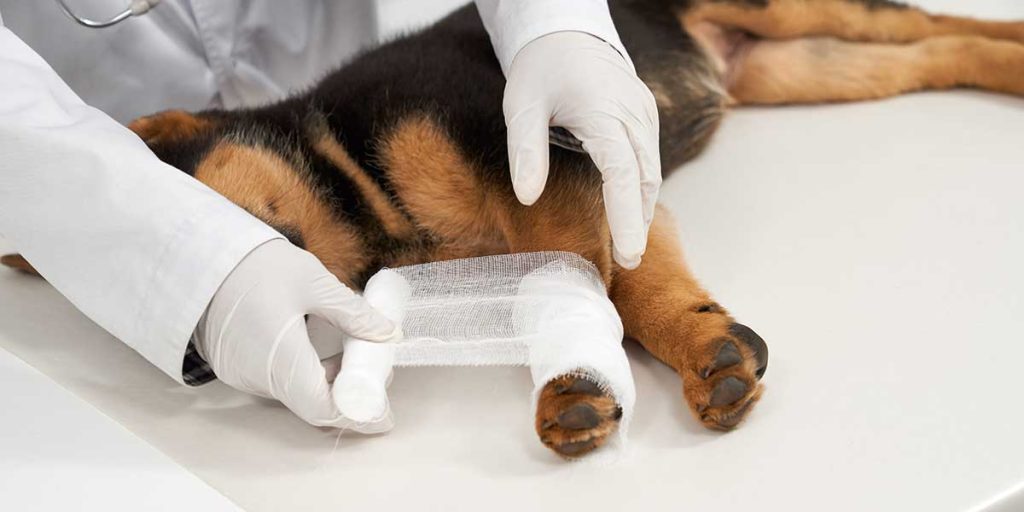
Seeing your pet come home with a gash is frightening. Staying calm and acting fast can protect your pet until you reach a veterinarian in Tampa.
In this guide, Harbourside Animal Hospital will explain what to do if your pet has a deep wound.
How To Tell When a Wound Is Deep
Start by looking for signs that the wound extends beneath the skin, including:
- Heavy bleeding: Blood keeps flowing after a few minutes of pressure.
- Exposed tissue: You can see fat or muscle under the skin.
- Gaping edges: The edges pull apart and will not close on their own.
Any one of these calls for quick action.
Stay Safe and Stop the Bleeding
Pets in pain may bite, even people they trust. Watch for signs your cat is in pain, such as hiding or hissing. If your pet is too upset to handle safely, call your vet for guidance.
If you can, press a clean cloth or dry gauze firmly over the wound. If blood soaks through, add layers instead of lifting the cloth.
What To Do After the Bleeding Stops
Here is what to do if your pet’s deep wound has stopped bleeding. Gently clean the wound with warm tap water or saline to remove debris. Skip hydrogen peroxide and ointments unless your vet tells you to.
Remember that basic open-wound treatment at home is only a temporary measure. Cover the area with dry gauze or a clean cloth for the trip, but avoid wrapping the area tightly.
Why Your Pet Still Needs a Veterinarian
Every deep wound needs prompt veterinary evaluation because damage to deeper structures may remain hidden beneath the skin. Seek emergency care immediately if bleeding will not stop or the wound is near the chest or abdomen. Bite wounds also require prompt care.
Your veterinarian may sedate your pet so they can clean the wound thoroughly. After examining the damage, they may use stitches or place a drain.
Watch for Infection and Healing Problems
Signs of Infection
Call your vet if you notice these signs of wound infection:
- Swelling: The area looks puffy or feels warm.
- Discharge: Yellow or green fluid is a red flag.
- Low energy: Your pet seems tired or stops eating.
A bad odor or worsening pain can also indicate an infection. Early treatment can help prevent an infection from worsening.
Supporting Healing
Good wound healing depends on following your vet’s directions. A properly fitted cone can prevent your pet from licking the area.
Count on Harbourside Animal Hospital When Your Pet Is Hurt
Quick first aid helps, but an exam guides treatment. During office hours, our team can assess urgent injuries and provide emergency vet care. We also offer reconstructive and wound repair surgery. Our diagnostic services for dogs and cats include ultrasound and radiology.
If you are unsure what to do about your pet’s deep wound, call Harbourside Animal Hospital at (813) 560-0567. We serve pet owners across Tampa, Florida.
| Prepared by: Harbourside Animal Hospital Editorial Team | Medically reviewed by: Dr. Timothy D. Hodge, DVM |
|
Published: September 27, 2026 |
Reviewed: September 26, 2026 |